Gachagua’s Ouster: A New Era for Kenyan Politics.
By Teddy Namayanja
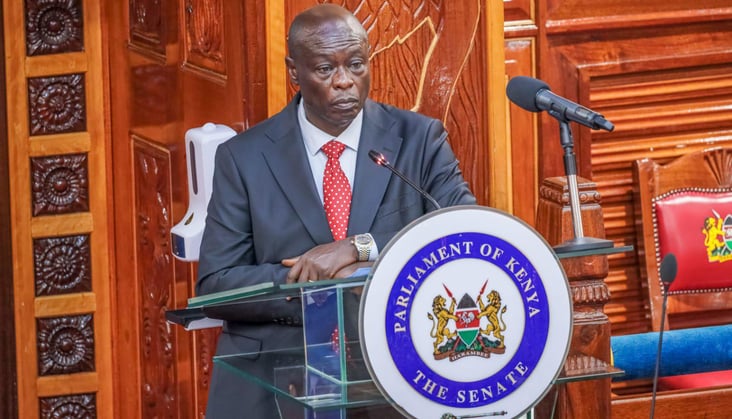
The impeachment of Kenya’s Deputy President Rigathi Gachagua has sent shockwaves throughout the country’s political landscape. But what made this impeachment possible, and what does it mean for Kenya’s democracy?
A Fractured Relationship
Gachagua’s fallout with President William Ruto created a rift that ultimately led to his impeachment. The two were once close allies, but their relationship soured, and Ruto formed an alliance with opposition leader Raila Odinga. This new partnership raised eyebrows, with many believing it was designed to push Gachagua out of office.
Constitutional Grounds
Kenya’s Constitution outlines clear guidelines for impeaching a Deputy President, including physical or mental incapacity, gross violation of the Constitution or any other law, serious criminal allegations, or gross misconduct. The process begins with a motion in the National Assembly, requiring support from at least one-third of Members of Parliament (MPs).
Political Maneuvering
The impeachment motion gained traction, with over 116 lawmakers supporting it. This bipartisan backing demonstrated the fragility of political alliances in Kenya, where allegiances can shift dramatically. The Ruto-Odinga pact may have stabilized the country, but it also posed a significant threat to Gachagua’s position.
Implications for Kenya’s Democracy
Gachagua’s impeachment signals a potential realignment within the Kenya Kwanza coalition. It may lead to new challengers in the upcoming elections, as President Ruto seeks to address dissent and assert control. This fallout could reshape alliances and significantly impact Kenya’s political future and governance dynamics.
Other East African countries that have impeached their heads of state include:
- Burundi: In 1996, President Sylvestre Ntibantunganya was impeached, but he continued to serve until 1998.
- Tanzania: Though not fully impeached, President Jakaya Kikwete faced an impeachment attempt in 2007, but it was unsuccessful.
- Uganda: Idi Amin, known for his dictatorial regime, was removed from power in 1979 after the Uganda-Tanzania War.
Kenya isn’t the only country in East Africa and Africa to have experienced impeachment processes or removals of heads of state.
Other African Countries:
- South Africa: President Jacob Zuma faced an impeachment vote in 2015 but survived, only to resign in 2018 due to mounting pressure.
- Nigeria: President Olusegun Obasanjo faced impeachment proceedings in 2002 and 2006 but completed his terms.
- Democratic Republic of Congo: President Laurent-Désiré Kabila was assassinated in 2001, and his son, Joseph Kabila, later faced impeachment attempts.
- South Sudan: President Salva Kiir faced impeachment threats in 2016 but remained in office.
Lessons for Neighboring Countries
The impeachment highlights the importance of independent government institutions. Neighboring countries can learn from Kenya’s experience:
- Separation of Powers: Ensure that the executive, legislative, and judicial branches operate independently, without undue influence from the head of state.
- Constitutional Safeguards: Establish clear guidelines for impeachment and removal of high-ranking officials to prevent abuse of power.
- Accountability: Foster a culture of accountability, where officials are held responsible for their actions.
Internationally, several nations have as well taken decisive action against their leaders through impeachment proceedings before. They include;
- Peru: President Pedro Castillo was impeached and removed from office on December 7, 2022, due to moral incapacity. This was his second impeachment attempt, after being acquitted in March 2022.
- South Korea: President Park Geun-hye was impeached and removed from office on March 10, 2017, due to abuse of power.
- Brazil: President Dilma Rousseff was impeached and removed from office on August 31, 2016, due to violation of budgetary laws
- United States: President Bill Clinton was impeached by the House of Representatives in 1998 but acquitted by the Senate in 1999 due to perjury and obstruction of justice.
- Philippines: President Joseph Estrada was impeached by the House of Representatives in 2000 but resigned from office before the Senate could vote on his impeachment.
- •Chile: President Sebastián Piñera was impeached by the Chamber of Deputies in 2021 but acquitted by the Senate.
- Paraguay: President Fernando Lugo was impeached and removed from office on June 22, 2012, due to nepotism and insecurity.
- Lithuania: President Rolandas Paksas was impeached and removed from office on April 6, 2004, due to interfering in a privatization transaction and leaking classified information.
- Indonesia: President Abdurrahman Wahid was impeached and removed from office on July 23, 2001, due to attempting to dissolve Parliament.
- Russia: President Boris Yeltsin faced multiple impeachment attempts but retained his post after an armed standoff with the Supreme Council.
The impeachment of Deputy President Gachagua underscores the complexities of Kenyan politics. As the country navigates this shift, neighboring nations can draw valuable lessons on the importance of independent institutions and constitutional safeguards.
Report compiled by Ms. Teddy Namayanja, she’s a Staff Writer at SML News UG, passionate about Politics, Justice, Law & Order and Human Rights.