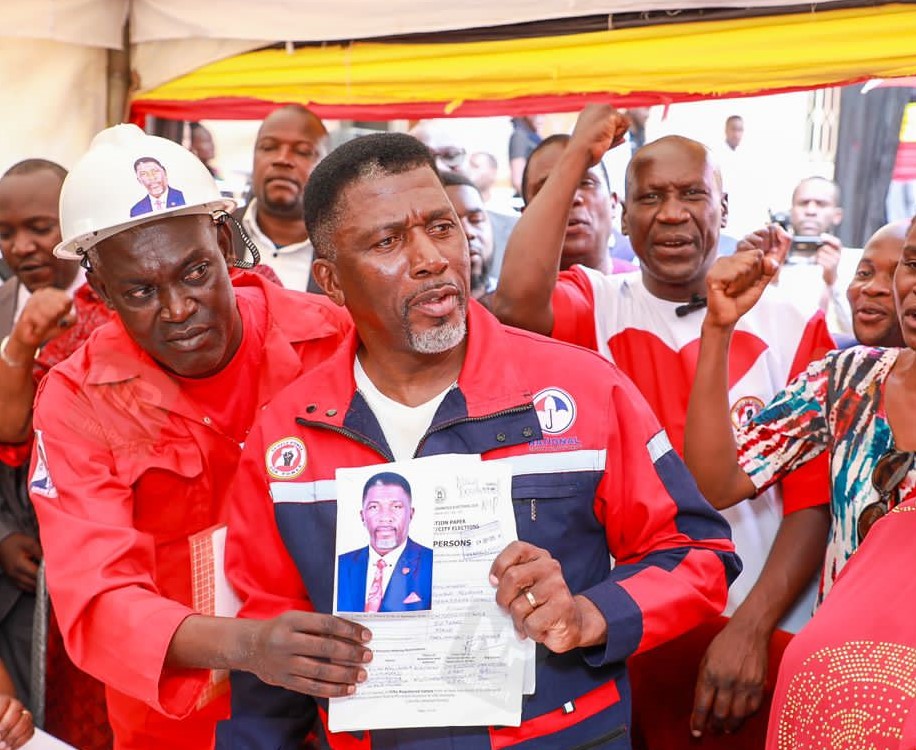
OPPOSITION HAS VOWED TO BOYCOTT REGIONAL PLENARY SITTINGS.
By Teddy Namayanja.
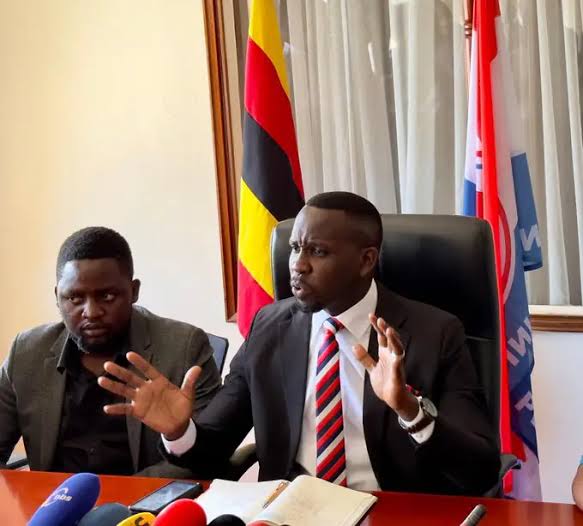
The Leader of Opposition in Parliament, Joel Ssenyonyi, announced this morning that they will not attend regional plenary sittings of the House across the country saying that the financial implication of sh5 billion for the sittings is not justified and that as key players in the preparations for these sittings, they were left out.
He made the announcement earlier today while addressing a press conference at Parliament. He said: “As opposition, we are not involved in these preparations and it’s not like am begging to attend these meetings, but by my rights as a member of the Parliamentary Commission, I should be part of this process.”
“The sh5 billion budget for these sittings is not justified, but rather a waste of the country’s resources,” he added.
“The money for regional sittings will be an additional cost to the money spent for the normal sittings, which we are paid for already. Why should we incur more costs and we are talking about sh5 billion here just to do work we are already paid for with our salaries? Besides, parliamentary committees are facilitated to collect views of all key players and stakeholders including the very last person at the grassroots. Why not let the respective committees do their work, instead of incurring these unnecessary costs?”
He explained: “The fact that members of parliament will travel to Gulu or any other regions to have these sittings, it doesn’t necessarily mean that members of the public will be allowed to attend these meetings or even participate in any way.”
“Something does not make sense here. Yes, the MPs will travel, but still won’t interact with the local people or any other stakeholders there. These sittings will not be conducted like rallies where everybody is welcome. According to the rules of Parliament, when we sit outside the Parliamentary chambers, the Speaker makes a declaration that the place whether a hotel or a normal ground, where we are is a chamber and non-members are not allowed in. You all know that when we sit here, visitors are only allowed in the gallery and even so, they don’t make any contributions or submissions other than watching the proceedings. So, then my question is, what is the relevance of spending all that money, just to make the same deliberations that can as well do from here? We’re already paid to do that.”
Asked whether this was a unanimous decision by all political parties, this is what he had to say.
“The shadow cabinet that I head, where all political parties are represented decided that we should not attend. However, if individual MPs go ahead to attend, it’s their call. We cannot force anyone to stay behind. Besides, there are some individuals whom you all know will attend because they are known for defying our position and decisions. We have seen this happen in the past. So, it won’t be the first time.”
He called upon voters to task the opposition MPs who will defy this position and attend with justifying the relevance of these sittings to them and how the taxpayer benefits from all this.
“These MPs are accountable to you because you are the ones that gave them the mandate to represent you. It’s your right to demand accountability from them.”
He assured journalists that should money for sitting allowances be disbursed to accounts of MPs who will not attend, it will be given back.
“Parliament is organised in terms of in-land and out-land activities and meetings. With in-land activities, the attendance list is used to confirm participants.Once someone’s name does not appear on that list, the money is automatically deducted from the person’s account and given back to the Parliamentary Commission account. Even when the person goes ahead to withdraw the money, that does not exempt them, it will still be deducted from their next salary. Outland activities also have accountability and these are the air tickets and hotel receipts among others that must be provided upon return. Failure to do so, the money is automatically deducted and given back.”
On June 16, 2024, Speaker Anita Among announced that Parliament would hold sittings in various regions, starting with Gulu. This prompted Ssenyonyi to write to the Speaker raising concerns about the lack of input from Parliament’s top organs and the financial strain on taxpayers. He questioned how the decisions had been made criticising the Speaker for bypassing established institutions and advised that the decision be further scrutinised by the Business Committee and the Parliamentary Commission.
Despite Senyonyi’s objections, Speaker Among reiterated during the State of the Nation Address that the Regional Plenary Sittings would proceed starting with the Inaugural session in Gulu from August 29-30, 2024, at Kaunda Grounds, with President Museveni opening the session.