


Protests Rock Nairobi & 26 Counties!! 10 Die & 400 Others Badly Injured In Kenya Protest
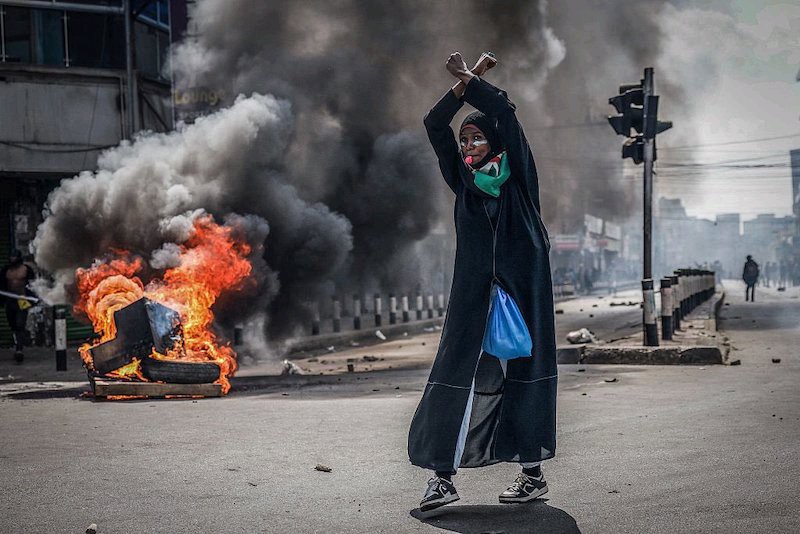
Kenya is facing one of its most intense waves of protests in recent years, as anger boiled over on Wednesday in Nairobi and across 26 counties. The demonstrations, mainly led by young people, were sparked by deep frustrations over government policies and the controversial Finance Bill. At least 10 people have been killed and over 400 injured in the unrest, which quickly spread to major cities including Mombasa, Eldoret, and Kisumu.
In the capital, Nairobi, the streets were filled with the sounds of chanting, fire, and resistance. Protesters lit bonfires and blocked roads, especially near State House, a key symbol of power. Parts of the city were shut down, with the government deploying both police and military to guard important buildings, including Parliament. Roads leading to key government offices were sealed off with razor wire as a precaution.
The Naivasha–Nakuru highway, a major road linking central Kenya, was also blocked, leading to huge traffic jams. Demonstrators carried Kenyan flags and placards with strong messages, such as “Ruto must go,” calling for the resignation of President William Ruto. Many of the protesters say they feel betrayed by leaders who promised change but delivered hardship instead.
As the protests grew larger, the Communications Authority of Kenya issued a surprise ban on live TV and radio coverage of the events. The authority claimed that some media houses were violating the law by showing the protests. The directive, signed by CA Director General David Mugonyi, warned broadcasters of strict punishment if they continued their coverage.
Soon after the ban, police reportedly raided the offices of NTV and KTN, two major private media outlets, and shut down their transmission signals. This move was met with strong criticism from journalists, civil society, and the public. The Kenya Editors Guild released a powerful statement, calling the action a serious attack on press freedom and a violation of the constitution. They reminded the government that media coverage is a public duty, not a crime.
In a major legal win for the protesters and media, the High Court of Kenya stepped in and suspended the CA directive. The court ruled that the ban on live coverage was illegal and unconstitutional. This ruling followed a petition filed by civil society groups who argued that the public has a right to know what is happening in the country.
The events of this week highlight deep divisions in Kenyan society and raise serious questions about democracy, press freedom, and the rights of citizens. As the country marks one year since similar deadly protests, the people of Kenya are once again demanding justice, accountability, and a voice in their future.

