


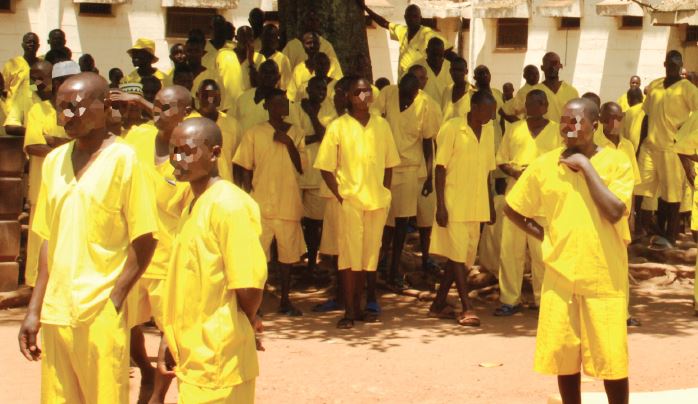
In Uganda, the fight to abolish the death penalty has become a central issue for human rights activists and organizations. At the forefront of this campaign is the Foundation for Human Rights Initiative (FHRI), which has worked tirelessly to raise awareness about the death penalty’s severe impact on human rights. The organization has been pushing for alternative sentences, such as life imprisonment, to replace capital punishment. Their efforts focus on influencing legal reforms that will bring Uganda’s justice system in line with international human rights standards. Despite a 2005 ruling by Uganda’s Constitutional Court that declared the death penalty constitutional, the court also ruled that mandatory death sentences should be removed and that those on death row should not stay there for more than three years. Yet, there are still 28 offenses, both civilian and military, punishable by the death penalty, which remains the highest number of capital crimes in East Africa.
Dr. Livingstone Ssewanyana, the Executive Director of FHRI, is a passionate advocate for ending the death penalty in Uganda. He argues that the death penalty is not only a cruel and outdated punishment but also a violation of the most basic human right: the right to life. In his words, “The right to life is an inalienable human right, and it is high time our justice system reflects that truth.” He and his team believe that Uganda can and should become a country where every individual is treated with dignity and humanity, regardless of their circumstances.
FHRI’s efforts have gained significant traction over the years. The organization has formed a coalition of civil society groups committed to the abolition of the death penalty in Uganda. Together, they organize events and campaigns throughout the year, with a special focus on World Day Against the Death Penalty, which is observed every October 10th. On this day, FHRI leads visits to death row inmates, organizes panel discussions, and carries out educational campaigns to highlight the importance of abolishing capital punishment. This year’s theme, “The Death Penalty Protects No One: Abolish it Now,” reinforces the message that the death penalty does not serve justice and only perpetuates a cycle of violence and suffering.
While Uganda remains one of the few countries in East Africa that still practices the death penalty, it is also part of a global movement working to abolish it. Over 112 countries around the world have either legally abolished or stopped practicing the death penalty. Yet, in Uganda, over 100 people remain on death row, a stark reminder of the country’s continuing reliance on this form of punishment. Dr. Ssewanyana points out, “The death penalty does not serve justice, nor does it protect the public. Instead, it perpetuates a cycle of violence and violates the very core of human rights.”
FHRI’s campaign has received support from various organizations and individuals who believe in the cause. The organization continues to advocate for a more compassionate and just legal system, where every life is valued and human dignity is upheld. Through advocacy, education, and policy influence, FHRI aims to change the public’s perception of the death penalty and encourage Ugandans to join the abolition movement. Their ultimate goal is to ensure that Uganda’s justice system evolves to reflect the values of humanity and fairness, leaving behind outdated practices like capital punishment.
In a world where justice should be about rehabilitation and the preservation of life, FHRI’s campaign to abolish the death penalty is a step toward a more humane and just society for all Ugandans.

