


By Amos Ssemuwemba
Health authorities in West Nile are closely tracking 30 individuals who came into contact with a confirmed Mpox case in Adjumani District. The first case, identified as a 12-year-old South Sudanese refugee, had spent a month at the Nyumanzi reception center after being transferred there with her family on August 3, 2024.
Speaking to journalists during a sensitization meeting in Arua City, Dr. Christopher Dradiku Azaba, Head of Public Health Emergencies at Arua Regional Referral Hospital, emphasized the importance of monitoring the situation. “So far, we have received information from the Adjumani team at the West Nile Public Health Emergency Center that they have identified 30 contacts, and they are following them closely to see who will develop signs and symptoms,” he said.
Dr. Azaba also advised the community to practice strict hygiene, urging people to “avoid kissing, hugging, and handshakes, and frequently wash hands with soap or use sanitizers.”
Further precautionary measures are being implemented at Uganda’s border with the Democratic Republic of Congo. “We have deployed volunteers at the Vurra Border to screen those entering Uganda, to help contain the spread of the virus,” Dr. Azaba added.
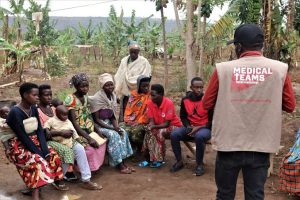
Dr. Alex Andema, Senior Executive Consultant at Arua Regional Referral Hospital, assured the public that the patient is recovering, and none of the quarantined contacts have shown signs of the disease. However, he voiced concern over West Nile’s vulnerability due to its proximity to high-risk areas. “Our region, being close to South Sudan and the Democratic Republic of Congo, is at a higher risk because of the porous borders. We will strengthen surveillance at these points,” Dr. Andema pledged.
The Ministry of Health has also weighed in on prevention strategies. Jackson Kadumye, Senior Communications Officer at the Ministry, urged those showing symptoms to seek immediate medical help, noting that “Mpox can only be confirmed after a laboratory test.” He also advised against having multiple sexual partners, which could increase the risk of infection, and cautioned communities that hunt wild animals such as squirrels and edible rats, as these animals may carry the virus.
Mpox, caused by the Monkeypox virus, spreads through close contact with infected individuals or contaminated surfaces. The World Health Organization has highlighted the virus’s ability to spread between people and occasionally through contact with infected animals. Uganda has so far recorded 24 cases, with the first confirmed on July 24, 2024, in Kasese District.
Health officials in the West Nile sub-region are urging the public to remain vigilant as they continue to monitor the situation.