


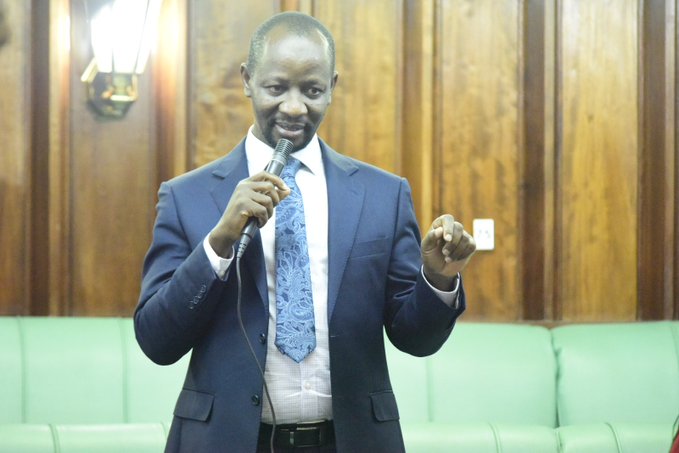
By Amos Ssemuwemba
Tensions flared in Parliament today afternoon as Ssemujju Nganda, the Kira Municipality MP, raised concerns over remarks made by Muhoozi Kainerugaba, the Chief of Defence Forces (CDF). Ssemujju has highlighted Muhoozi’s controversial statements regarding the presidency in Uganda, asserting that no civilian would ascend to the office after his father, President Yoweri Museveni.
“After his father, no civilian will be President in Uganda,” Ssemujju quoted Muhoozi, emphasizing that such declarations contradict the core principles of the Ugandan Constitution. He pointed out that a military officer endorsing a political candidate, particularly as CDF, raises serious constitutional concerns. “These two issues go against the core principles of this Constitution,” he remarked, reiterating the inappropriateness of Muhoozi’s threats and political endorsements.
https://x.com/smlnewsonline/status/1838594915774734532?t=63Hq_WODAn0G4fKDQnGWfA&s=19
Ssemujju’s remarks have been made during a parliamentary session where he urged Deputy Speaker Thomas Tayebwa to compel the government to explain why Muhoozi has been allowed to contravene various legal provisions without repercussions. “Why has he been allowed to threaten to overthrow the Constitution by blocking civilians from becoming Presidents in Uganda?” he questioned.
The session also turned personal as Ssemujju took aim at Frank Tumwebaze, the Minister of Agriculture, for repeatedly violating the prescribed dress code for MPs. “If you look at the front bench, from where Hamson Obua is seated, you can see smartly dressed Ministers,” Ssemujju noted, praising the appearance of his colleagues while critiquing Tumwebaze’s casual attire. “Tumwebaze has made it a point to come to Parliament as if he is going to milk cows. Is he in order to come to Parliament dressed as if he is going to milk his cows?” he asked.

In defense of his attire, Tumwebaze referred to his shirt as a traditional African garment, asserting that it should be appreciated as part of Uganda’s cultural heritage rather than criticized.
This exchange highlights the ongoing tensions surrounding military involvement in politics and the importance of decorum within the legislative assembly. As Uganda approaches the next presidential elections, the implications of these discussions continue to resonate among lawmakers and the public alike.