


By Amos Ssemuwemba
In a significant move to strengthen agricultural ties, former Nigerian President Olusegun Obasanjo visited Uganda on Wednesday, meeting with President Yoweri Museveni to explore trade opportunities in the dairy and coffee sectors. During his tour of Pearl Dairy Farms in Mbarara City, Obasanjo engaged with farmers in Kiruhura and Kazo districts, expressing enthusiasm for Uganda’s impressive annual milk production capacity of 5.7 billion liters.
Obasanjo emphasized Nigeria’s eagerness to import processed milk and coffee from Uganda, stating, “I am here to explore how Nigeria can enhance its imports of Ugandan dairy products and coffee.” He pointed out the lack of awareness among African nations regarding each other’s agricultural capabilities, highlighting Nigeria’s dependence on milk imports from Europe despite Uganda’s status as a major exporter. “I recently learned that Uganda is the net exporter of milk in Africa,” he remarked.
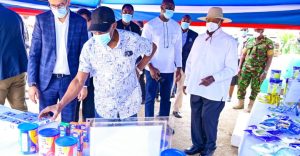
The urgency of this dialogue is underscored by Nigeria’s Minister of State for Agriculture and Food Security, Sabi Abdullahi, who disclosed that the country spends around $1.5 billion annually on dairy imports, as local production falls short of 60% of demand. This shortfall poses serious nutritional challenges, particularly for Nigerian children suffering from severe acute malnutrition.
Obasanjo’s visit coincides with ongoing tensions regarding Uganda’s dairy exports to Kenya, which recently imposed a ban on Ugandan powdered milk. Local manufacturers are now urging government action to address this setback.
While Ugandans consume only about 0.5 liters of milk per day—well below the recommended intake—President Museveni assured Obasanjo of Uganda’s capability to meet both local and international demands. He encouraged farmers to adopt zero grazing practices and invest in silage production to enhance profitability.
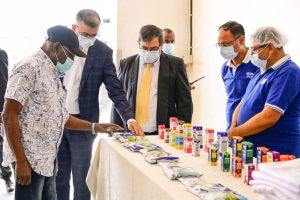
Minister of State for Animal Industry, Hon. Bright Rwamirama, added that Uganda’s dairy exports have reached a value of $264.5 million, announcing plans to implement measures against tick infestations, including the development of an effective tick vaccine to further boost milk production.

