



By Amos Ssemuwemba
The government has taken legal action against 80 people from Lwengo, Kyotera, and Rakai districts for rejecting compensation payments for their land, which falls within the path of the East African Crude Oil Pipeline (EACOP) project. The lawsuit, filed by the Attorney General through Senior State Attorney Imelda Adong, accuses the project-affected persons (PAPs) of obstructing the pipeline’s progress by refusing the compensation amounts offered during the property evaluation process.
The application, lodged at the Masaka High Court, seeks court orders to compulsorily acquire the disputed land, deposit the compensation in court, and grant eviction and demolition orders against the affected persons. The government argues that these steps are necessary to ensure the EACOP project proceeds without further delays.
Adong revealed that the 80 PAPs, who are the registered administrators of 41 estates, were collectively offered Shs 701 million in compensation. However, they rejected the amount, arguing it was insufficient to cover the value of their properties. “Despite repeated negotiations, the PAPs have refused to vacate the land, thereby hindering the progress of this critical national project,” Adong stated.
The government’s legal move has sparked criticism from the affected landowners, who argue that their rights are being violated. Representing the PAPs, lawyer Peter Alinaitwe contended that the government is attempting to forcibly strip his clients of their land rights. “The compensation offered does not reflect the true value of the properties that will be lost to the project. The contractor hired to assess the compensation made several errors, leaving unresolved grievances that have persisted for over three years,” Alinaitwe said.
Alinaitwe urged the government to seek a harmonious settlement with the affected persons rather than resorting to litigation, which he argued would further burden the PAPs. He expressed concern that the court case might only deepen the grievances of the landowners. “A peaceful resolution would be more beneficial to all parties involved, rather than this costly legal battle,” he added.
Masaka High Court Registrar Roy Kalungi has scheduled the hearing for September 16, with both sides preparing to present their arguments.
One of the PAPs, Cosma Yiga, who stands to lose 2.7 acres of land planted with coffee, banana, mango, and jackfruit trees, voiced his frustration with the government’s approach. Yiga was offered Shs 43.6 million in compensation—a figure he says is far below the actual value of his property. “The government is prioritizing the interests of the oil company over those of local residents. How are we supposed to rebuild our livelihoods with such meager compensation?” Yiga questioned.
Yiga further alleged that while some PAPs signed consent forms to give up their land, the majority are dissatisfied with the compensation and are struggling to find ways to sustain their families. “This project is pushing us to the brink. We’re not against development, but we want fairness,” he stated.
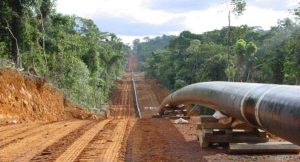
The EACOP project, a 1,443-kilometer-long pipeline that will transport Uganda’s crude oil from Hoima to the Chongoleani Peninsula in Tanzania, has been marred by numerous disputes over land acquisition and compensation. As the court hearing approaches, the outcome could set a significant precedent for how such conflicts are resolved in the future.